

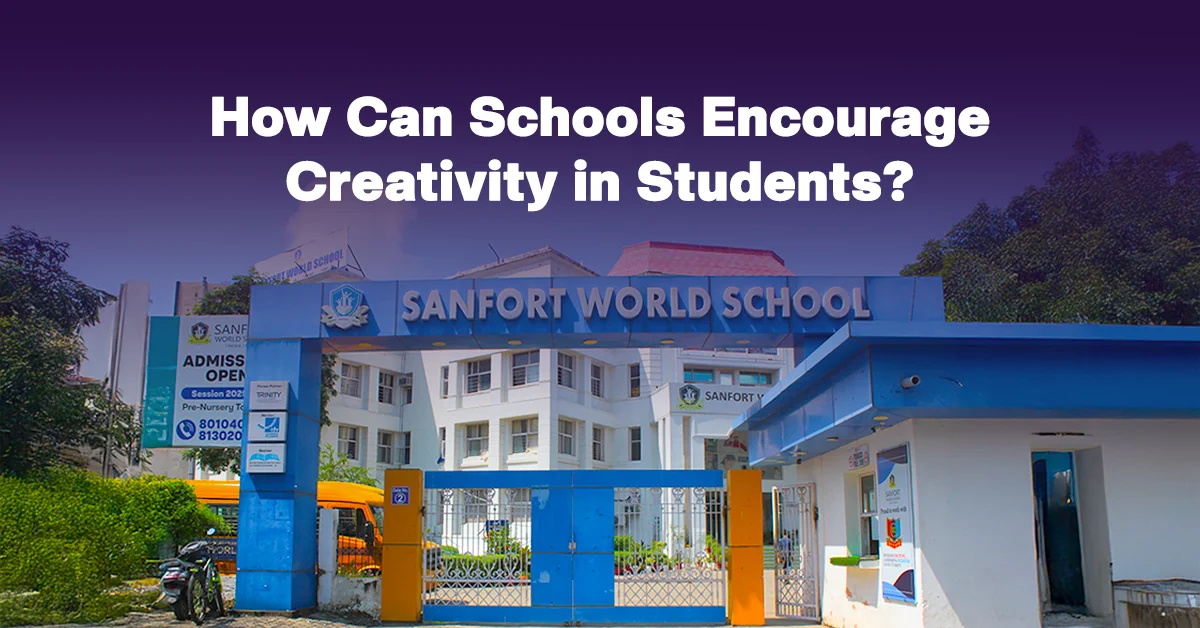
Children are naturally curious. They ask questions, experiment with ideas, create stories from simple situations, and often find their own ways to solve everyday problems. This natural curiosity is one of the foundations of creativity.
However, creativity can slowly become limited if children are always expected to follow one method, give one correct answer, or learn only by memorising information. This is why schools have an important role to play in creating an environment where children feel comfortable asking questions, exploring possibilities, making mistakes, and expressing their ideas.
For schools in a growing and dynamic community like Greater Noida, preparing children for the future means going beyond academic knowledge. Students also need creative thinking, problem-solving skills, curiosity, confidence, and the ability to look at challenges from different perspectives.
At Sanfort World School, Greater Noida, we believe creativity is not limited to art or craft. It can be developed through everyday learning, classroom conversations, activities, projects, and the way children are encouraged to approach problems.
Why Is Creativity Important for Students?
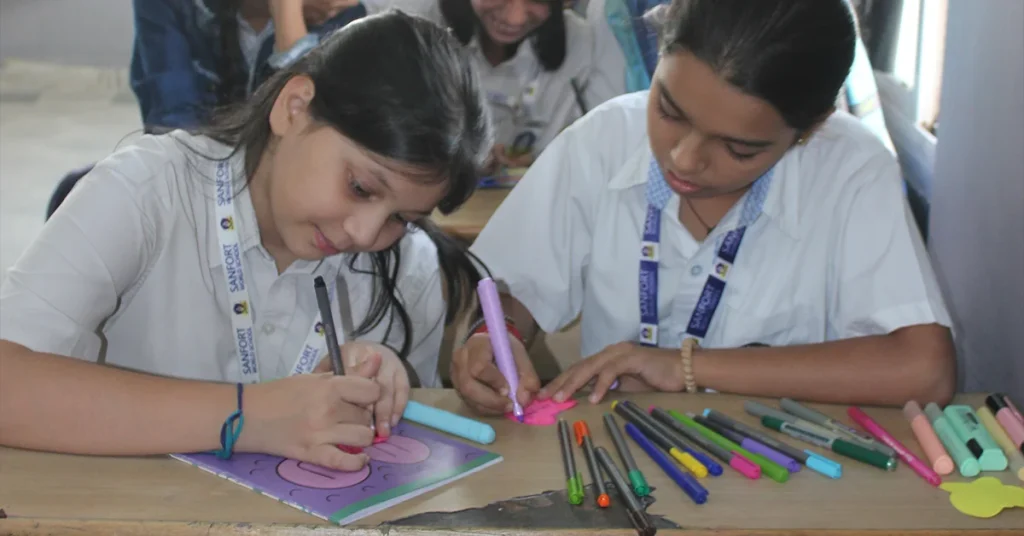
Children are naturally curious. They ask questions, experiment with ideas, create stories from simple situations, and often find their own ways to solve everyday problems. This natural curiosity is one of the foundations of creativity.
However, creativity can slowly become limited if children are always expected to follow one method, give one correct answer, or learn only by memorising information. This is why schools have an important role to play in creating an environment where children feel comfortable asking questions, exploring possibilities, making mistakes, and expressing their ideas.
For schools in a growing and dynamic community like Greater Noida, preparing children for the future means going beyond academic knowledge. Students also need creative thinking, problem-solving skills, curiosity, confidence, and the ability to look at challenges from different perspectives.
At Sanfort World School, Greater Noida, we believe creativity is not limited to art or craft. It can be developed through everyday learning, classroom conversations, activities, projects, and the way children are encouraged to approach problems.
Why Is Creativity Important for Students?
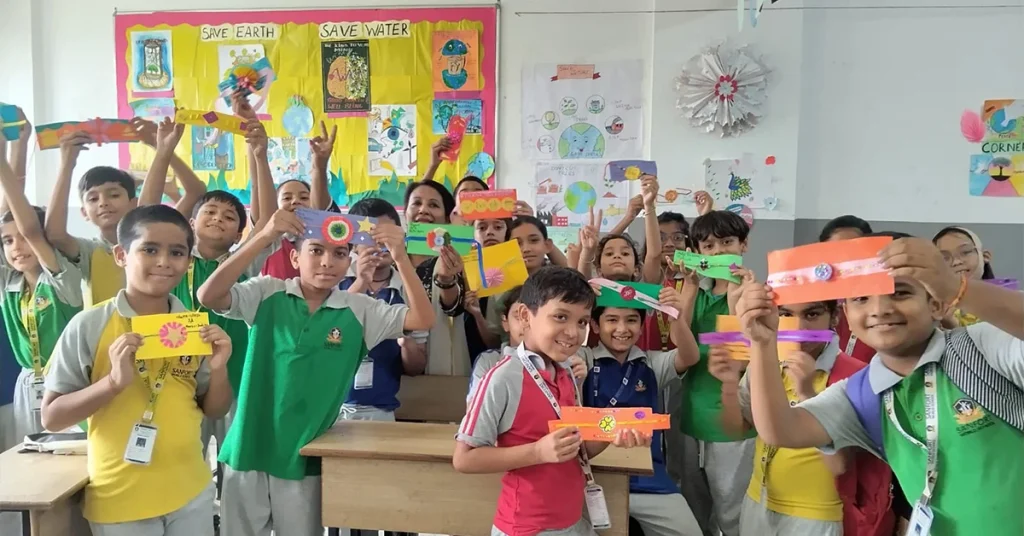
1. Encourage Children to Ask Questions
Creativity often begins with a simple question: “Why?” When children ask questions, they are trying to understand something beyond what they have already been told. Schools can encourage this curiosity by creating classrooms where students feel comfortable asking questions and sharing their thoughts. A teacher does not always need to provide an immediate answer. Sometimes, asking students what they think and encouraging them to explore the possibilities can lead to a much richer learning experience.
2. Allow Different Ways of Solving a Problem
There is often more than one way to approach a problem. For example, instead of asking students to solve a mathematics problem using only one method, teachers can encourage them to find different approaches and explain their reasoning. Similarly, in science, students can be encouraged to think about what might happen before an experiment is conducted. This helps children understand that creative thinking is not about being different simply for the sake of it. It is about looking at a problem carefully and finding an effective way forward.
3. Make Learning More Hands-On
Children understand concepts differently when they get an opportunity to experience them. Projects, experiments, models, role plays, presentations, group activities, and practical tasks can turn a lesson into an experience. Instead of simply reading about something, students can research it, discuss it, create something, and present what they have learned. Hands-on learning also gives children the opportunity to make choices and take ownership of their work.
4. Give Students Opportunities to Express Themselves
Every child has different interests and strengths. One student may enjoy writing, another may be interested in drawing, while another may prefer building, speaking, performing, or experimenting. Schools can encourage creativity by giving students different ways to communicate what they have learned. When children are given some freedom to express their ideas, they can gradually become more confident in their own abilities.
5. Let Children Make Mistakes
A child who is afraid of giving the wrong answer may eventually stop trying to give an answer at all. Creativity requires children to experiment, and experimentation naturally involves mistakes. Schools can help by creating a learning environment where students understand that making a mistake is not the end of the learning process. The important question should be: What can we learn from it, and what can we try differently next time? This approach can help children become more confident, resilient, and willing to explore new ideas.
6. Connect Classroom Learning With Real Life
Children become more interested in learning when they understand how it connects to the world around them. A mathematics lesson can involve planning a budget. A science lesson can begin with something students have observed at home. A language activity can involve writing about a personal experience. A social studies project can encourage students to explore their own neighbourhood or community. These real-life connections give children a reason to think, investigate, and apply what they have learned.
7. Encourage Collaboration and Sharing of Ideas
Creativity does not always happen when a child is working alone. Group discussions and collaborative projects allow students to hear different opinions and approaches. One child’s idea can lead another child to think of something completely different. Working together also teaches children how to listen, explain their thinking, accept different viewpoints, and build on each other’s ideas.
8. Provide Time for Exploration
Not every learning experience needs to have an immediate result. Children need some time to explore an idea, experiment with materials, read about something that interests them, or simply think about a question. Giving students opportunities for exploration can help them develop curiosity and become more comfortable with independent learning. Sometimes, the most valuable part of an activity is not the final product but the thinking that happens along the way.
How Sanfort World School, Greater Noida, Nurtures Creativity
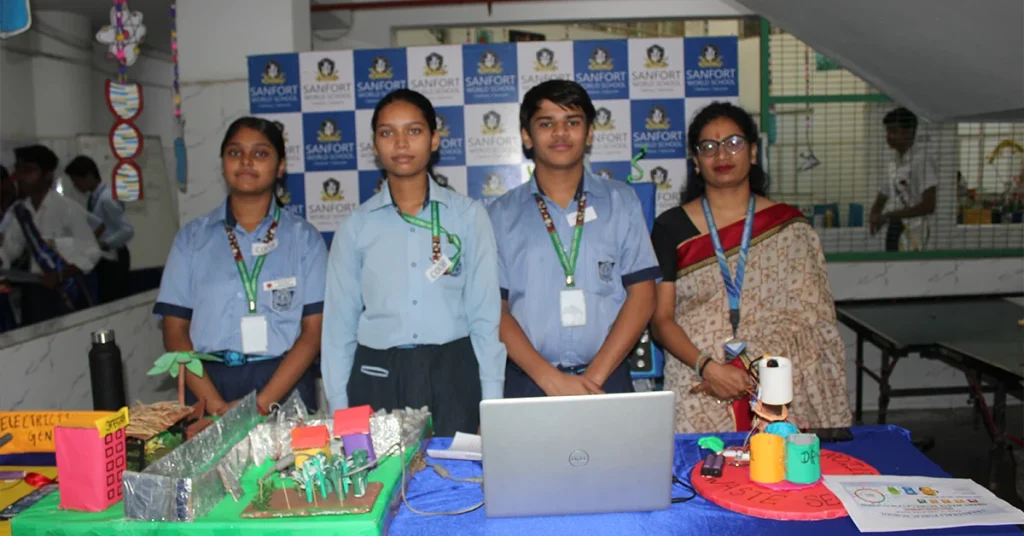
At Sanfort World School, Greater Noida, we believe that children learn best when they are actively involved in the learning process.
Our focus is not simply on helping students remember information for an examination. We want them to understand what they are learning and develop the confidence to use that knowledge in different situations.
Through classroom discussions, activities, projects, practical learning, creative expression, and collaborative experiences, students get opportunities to explore ideas and participate actively rather than remaining passive learners.
We also recognise that creativity looks different in different children. Some students are quick to share their ideas, while others may need more time and encouragement. Some express themselves through words, while others do so through art, design, experiments, models, or practical activities.
Creating space for these differences is important. When children feel that their ideas are valued, they become more willing to participate, experiment, and think independently.
As a school in Greater Noida, we also understand the importance of preparing students for a changing world. Academic knowledge remains important, but children also need to develop critical thinking, communication, collaboration, creativity, and problem-solving skills that they can carry with them beyond the classroom.
Conclusion
Creativity is not something that belongs only in an art room. It can be part of mathematics, science, languages, social studies, projects, discussions, and everyday classroom experiences.
Schools can nurture creativity by encouraging questions, accepting different approaches, providing hands-on learning opportunities, allowing children to express themselves, and giving them the confidence to experiment and learn from mistakes.
At Sanfort World School, Greater Noida, we believe that a good education should help children become confident learners who are not afraid to ask questions, explore new ideas, and find their own way of solving problems. Because the ability to think creatively is not just useful for school. It is a skill children can carry into every stage of life.
Frequently Asked Questions on Schools Encourage Creativity in Students
1. How can schools encourage creativity in students?
Schools can encourage creativity by giving students opportunities to explore ideas, ask questions, experiment, solve problems, and express themselves through art, writing, projects, activities, and classroom discussions.
2. Why is creativity important for students?
Creativity helps students think independently, approach problems from different perspectives, communicate their ideas, and become more confident in making decisions. These skills are useful both inside and outside the classroom.
3. What activities can schools use to develop creativity in children?
Schools can use activities such as art and craft, storytelling, creative writing, music, drama, project-based learning, experiments, debates, model-making, and problem-solving activities to give students different ways to explore their creativity.
4. How does project-based learning encourage creativity?
Project-based learning allows students to move beyond memorising information. They can research a topic, develop their own ideas, decide how to present them, and find solutions to problems, making learning more active and creative.
5. How can teachers encourage creative thinking in the classroom?
Teachers can encourage creative thinking by asking open-ended questions, welcoming different answers, giving students time to explore ideas, and allowing them to explain how they reached a particular solution rather than focusing only on the final answer.
6. Can creativity improve academic learning?
Yes. Creative learning can make lessons more engaging and help students understand concepts by connecting them with real-life situations, practical activities, discussions, and projects. Creativity can complement academic learning rather than compete with it.
7. How can parents support creativity at home?
Parents can encourage creativity by giving children time to play, read, draw, build, write, explore hobbies, and try new things. Asking children about their ideas instead of immediately giving them the answer can also help them think independently.
8. Should schools focus on creativity along with academics?
Absolutely. Academic knowledge is important, but students also need problem-solving, communication, critical thinking, collaboration, and creative thinking skills. A balanced school environment can help children develop both.
9. How does a creative school environment benefit children?
A creative school environment gives students the confidence to ask questions, share their ideas, try new approaches, and learn from mistakes. It can make students more curious and actively involved in their learning.
10. How do extracurricular activities help develop creativity?
Extracurricular activities give children opportunities to discover interests that may not always emerge during regular lessons. Activities involving sports, art, music, theatre, public speaking, technology, and clubs can help students explore different abilities and ways of thinking.
11. What should parents look for in a school that supports creativity?
Parents can look for a school that provides activity-based learning, project work, creative activities, extracurricular opportunities, supportive teachers, and an environment where students are encouraged to ask questions and express their ideas.
12. Are there schools in Greater Noida that focus on creativity and holistic development?
Yes. Parents looking for a school in Greater Noida near Pari Chowk can consider schools that combine academics with creative activities, experiential learning, sports, and other opportunities that support a child’s overall development.
13. How can creativity help children prepare for the future?
The ability to think creatively can help students adapt to new situations, approach unfamiliar problems, develop ideas, and find solutions. These skills can become increasingly valuable as students move into higher education and their future careers.
14. How can schools balance creativity with exam preparation?
Creativity does not have to take time away from academics. Schools can integrate creative thinking into regular subjects through projects, discussions, experiments, presentations, and practical activities. This allows students to learn the curriculum while developing broader skills.
15. How can a school near Pari Chowk, Greater Noida support overall student development?
A good school environment can support students through a combination of strong academics, creative learning, extracurricular activities, sports, technology, and opportunities for personal development. The aim should be to help children become capable and confident learners, not simply prepare them for examinations.