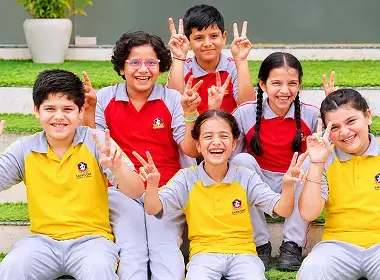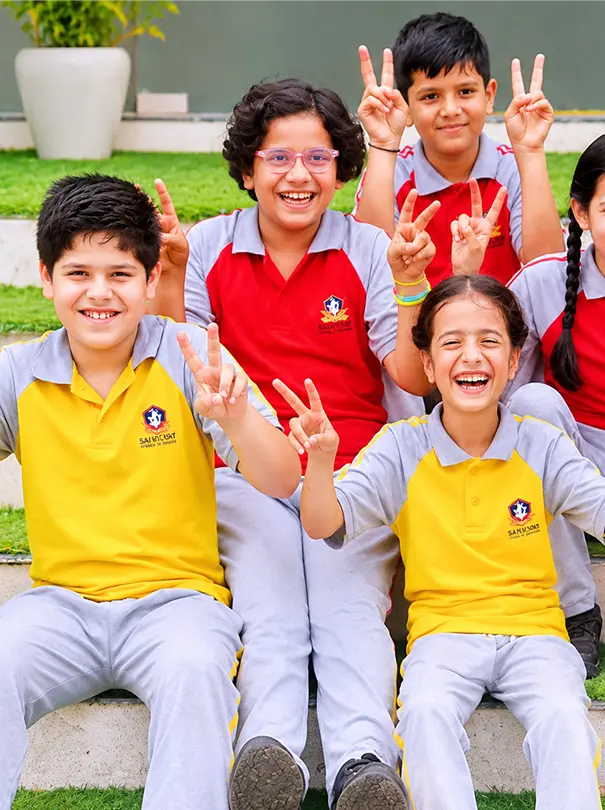


Choosing a school for your child is one of the first important decisions you make as a parent. The early years of education play a significant role in shaping a child’s personality, learning habits, confidence, and understanding of the world around them.
For young children, going to school is not just about learning alphabets, numbers, or writing their first words. It is also about making new friends, interacting with teachers, learning to share, expressing themselves, and becoming comfortable in an environment outside their home.
This is why choosing a school for nursery to primary classes requires a little more thought. Parents need to look at how teachers interact with young learners, how classrooms are designed, how children participate in activities, and how the school takes care of their safety and everyday needs.
For parents exploring schools near Pari Chowk, Greater Noida, the question is not simply which school has the best infrastructure. It is about finding a place where children feel comfortable, enjoy learning, and receive the right guidance as they grow.
So, what should parents look for when choosing a school for nursery to primary classes? Let’s understand the important factors.
What Should Parents Look for When Choosing a School for Young Learners?
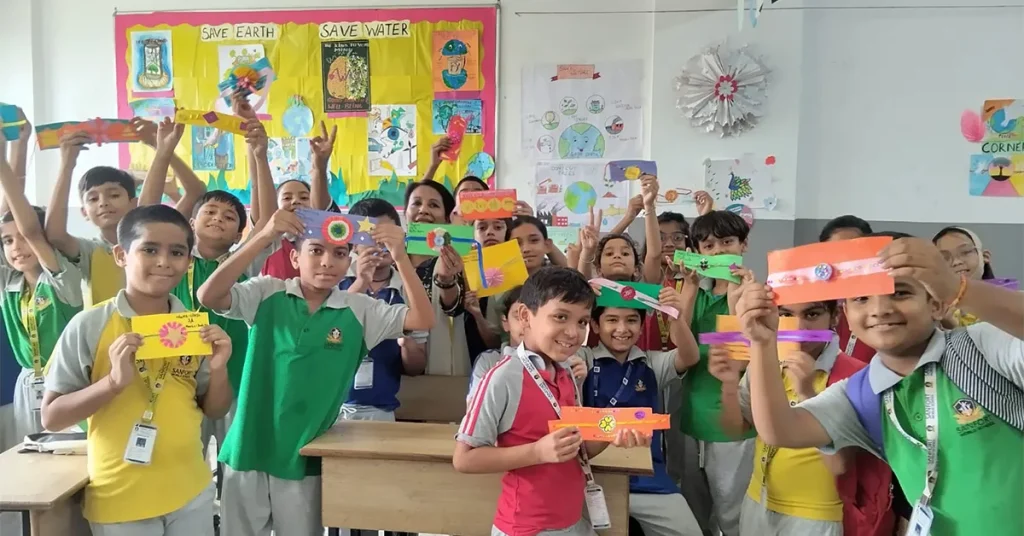
1. A Friendly Environment Where Young Children Feel Comfortable
For many children, nursery is their first experience of spending several hours away from their parents. A new building, unfamiliar faces, a different routine, and being around other children can feel overwhelming at first.
Some children adjust quickly, while others need more time to become comfortable. A good school understands this and gives children the time and encouragement they need.
During your school visit, observe how teachers interact with younger students. Do they speak to children patiently? Are children encouraged to ask questions and participate? Do teachers help students who feel shy or hesitant?
At this age, a welcoming classroom and friendly teacher can make a significant difference. When children feel safe and accepted, they gradually become more comfortable exploring their surroundings, making friends, and participating in classroom activities.
2. Teachers Who Understand How Young Children Learn
Young learners do not understand everything through explanations alone. They learn by observing, listening, touching, exploring, repeating, and participating in activities.
For example, a child may understand counting more easily by arranging colourful blocks than by simply looking at numbers in a textbook. Similarly, storytelling, pictures, rhymes, and conversations can help children develop language and communication skills.
This is why teachers working with younger children need patience, creativity, and an understanding of different learning abilities.
Parents should look for teachers who:
- Encourage children to ask questions and express their thoughts.
- Explain concepts through examples, activities, and demonstrations.
- Give individual attention when a child needs additional help.
- Appreciate children’s efforts rather than focusing only on correct answers.
- Create opportunities for every child to participate.
A caring teacher understands that children develop at different speeds. The objective should be to help every child progress with confidence rather than making them feel pressured to keep up with others.
3. Learning Through Activities, Play, and Everyday Experiences
Young children are naturally curious. They want to explore objects, ask questions, experiment with things, and understand how the world works.
Schools should use this curiosity to make learning interesting and meaningful.
Activity-based learning allows children to understand concepts through experiences. For example:
- Language development: Storytelling, picture reading, rhymes, and conversations help children learn new words and communicate better.
- Mathematical understanding: Counting objects, sorting shapes, identifying patterns, and playing number games introduce basic mathematical concepts.
- Environmental awareness: Nature walks, gardening, and observation activities help children understand plants, animals, and their surroundings.
- Creative thinking: Drawing, colouring, painting, and craft activities allow children to explore their imagination.
- Practical understanding: Simple activities involving objects, textures, colours, and everyday materials help children learn through observation and exploration.
When children enjoy what they are learning, they are more likely to participate, remember concepts, and develop an interest in discovering new things.
4. Classrooms Designed for Small and Young Learners
Classrooms for nursery and primary students should be designed according to their age and everyday needs.
Younger children need spaces where they can move comfortably, interact with classmates, participate in group activities, and access learning materials without difficulty.
Parents should check whether classrooms have appropriate furniture, good lighting, ventilation, child-friendly learning resources, and enough space for different activities.
Visual learning materials, colourful displays, educational toys, books, and activity-based resources can also make classrooms more engaging.
It is equally important to understand how teachers organise classroom routines. Young children benefit from a balance of learning sessions, play, movement, creative activities, and short breaks.
A well-planned classroom helps children gradually develop the ability to concentrate, follow instructions, complete simple tasks, and become more independent.
5. Helping Children Develop Social Skills and Make Friends
School is often the first place where children regularly interact with people outside their family.
They learn to share toys, wait for their turn, listen to others, work in groups, and understand that different children may have different opinions and interests.
These everyday interactions are important for developing social and emotional skills.
For example, when children participate in a group activity, they learn to cooperate and complete tasks together. During playtime, they learn to follow rules, share resources, and resolve small disagreements.
Teachers also play an important role by guiding children when they find it difficult to communicate, share, or interact with their classmates.
Parents should look for a school that encourages group participation and gives children opportunities to build friendships in a positive environment.
6. Sports and Physical Activities for Healthy Development
Young children need regular opportunities to move, play, and explore their physical abilities. Sitting in classrooms for long periods is not enough for their development.
Activities such as running, jumping, balancing, throwing, catching, and playing simple games help children develop coordination, strength, balance, and body awareness.
Sports and games also introduce important habits such as following instructions, taking turns, cooperating with others, and developing discipline.
When exploring schools in Greater Noida, parents should check whether younger students have access to age-appropriate play areas and regular physical activities.
It is also worth asking whether sports activities are adapted to different age groups rather than expecting younger children to participate in activities designed for older students.
7. Creative Activities That Help Children Express Themselves
Not every child expresses their thoughts and feelings through words. Some children enjoy drawing, others love singing, dancing, storytelling, or performing in front of an audience.
Creative activities give young learners opportunities to explore their interests without worrying about making mistakes.
Art and craft help children experiment with colours, shapes, and materials. Music and rhymes support listening and language development. Dance and drama encourage movement, expression, and confidence.
Parents should look for schools that provide regular opportunities for creative activities rather than limiting them to occasional celebrations or annual functions.
These experiences help children discover their interests and understand that learning can happen in many different ways.
8. Safety, Supervision, and Personal Care for Younger Children
Safety deserves special attention when choosing a school for nursery and primary students. Younger children may not always recognise potential risks or know how to respond to unfamiliar situations. They therefore need proper supervision and guidance throughout the school day.
During your school visit, check for CCTV surveillance, security personnel, controlled entry points, and clear procedures for managing visitors and student dispersal.
Also ask how children are supervised during classroom activities, playground time, washroom breaks, and transport.
A few other important things to check include:
- Health room: Is there a designated space where children can rest if they feel unwell?
- Support staff: Are staff members available to assist younger children with their everyday needs?
- Clean washrooms: Are washrooms clean, accessible, and suitable for younger students?
- Emergency arrangements: Does the school have procedures for contacting parents and arranging medical assistance when required?
- Student supervision: Are children appropriately supervised during breaks, activities, and movement around the campus?
A safe school environment is not just about security equipment. It also depends on the attention, awareness, and responsibility of the people who interact with children every day.
9. Developing Good Habits and Everyday Independence
Nursery and primary education is also about helping children become more independent.
At home, parents often manage most everyday tasks for their children. At school, children gradually learn to manage simple responsibilities themselves.
They learn to organise their belongings, keep their books and stationery properly, follow classroom routines, wash their hands, maintain cleanliness, and take care of their personal belongings.
Teachers help them develop these habits through regular instructions, encouragement, and practice.
Children also learn to listen carefully, follow simple directions, complete activities, and take responsibility for small tasks.
These experiences help them become more confident and prepared for the increasing responsibilities of primary education.
10. A Smooth Learning Journey from Nursery to Primary Classes
The transition from nursery to primary classes is an important stage in a child’s education.
In the early years, learning is largely based on play, exploration, interaction, and basic concept development. As children move into primary classes, they gradually develop reading, writing, mathematical understanding, and independent learning skills.
Parents should therefore consider whether a school offers continuity in its academic approach.
A good learning programme should introduce new concepts gradually, strengthen foundational literacy and numeracy, and provide opportunities for children to apply what they learn.
Teachers should also recognise when a child needs additional support and help them adjust to changing academic expectations.
The objective is to make this transition comfortable while preparing children for more structured learning.
Why Sanfort World School Is Worth Considering for Nursery to Primary Classes
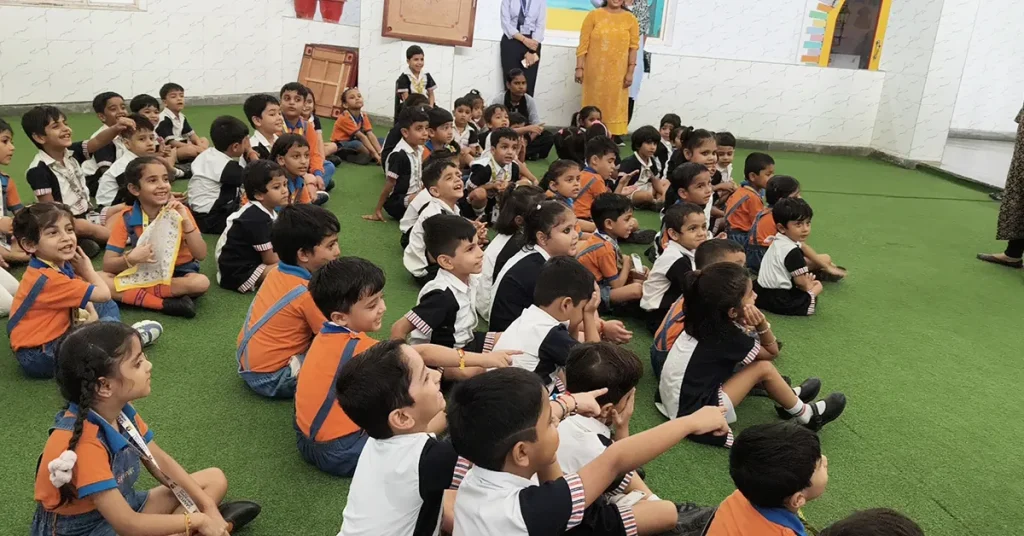
When parents explore schools near Pari Chowk, Greater Noida, they should look for a school that understands the specific needs of young learners.
At Sanfort World School, we believe that early education should be a positive and enjoyable experience. Children should feel comfortable coming to school, develop an interest in learning, and receive the guidance they need as they grow.
Our approach combines classroom education, practical learning, creative activities, sports, and personal development.
Caring Teachers and Supportive Staff
We understand that younger children need more patience, attention, and encouragement as they adjust to school life.
Our teachers work towards creating a friendly classroom environment where children can ask questions, participate in activities, and express their thoughts without hesitation.
We encourage students to develop at their own pace while building the academic and social skills they need for their next stage of education.
Our staff also supports the everyday needs of younger students, helping them become comfortable with school routines and classroom activities.
Interactive Classrooms and Activity-Based Learning
Our classrooms are designed to support interactive teaching and student participation.
Through visual learning resources, demonstrations, discussions, and classroom activities, teachers help children understand concepts rather than simply memorising information.
As students progress through primary classes, they are gradually introduced to more structured academic learning while continuing to participate in activities that encourage curiosity and independent thinking.
Learning Spaces That Encourage Exploration
We provide different learning facilities that help students explore subjects beyond their regular classroom lessons.
Our campus includes Physics, Chemistry, Biology, Mathematics, and ICT laboratories, along with a library and Life Skills Lab.
While these facilities support students across different age groups, our broader approach is to encourage curiosity and practical understanding from the early years onwards.
Sports, Games, and Physical Activities
We give importance to physical development alongside academics.
Our sports facilities include cricket, football, basketball, badminton, swimming, skating, gymnastics, Taekwondo, and yoga.
Younger students are encouraged to develop their physical abilities through suitable activities, games, and age-appropriate participation.
Our all-weather swimming pool also provides opportunities for students to develop swimming skills under appropriate supervision.
Art, Music, Dance, and Creative Activities
We encourage children to explore their creative interests through art, craft, music, dance, and drama.
These activities give young learners opportunities to experiment, express themselves, participate with classmates, and develop confidence.
Whether a child enjoys painting, singing, dancing, or performing, we believe these interests deserve encouragement as part of their school experience.
Safety and Student Well-Being
We understand that parents want to know their children are in a safe and supportive environment.
Our campus has CCTV surveillance and security personnel to support student safety. We also have a designated health room where students who feel unwell can receive assistance from support staff.
Our teachers and staff work towards maintaining a caring environment where children feel comfortable seeking help and guidance whenever they need it.
GPS-Enabled School Transport
For parents living around Pari Chowk, Omega, Alpha, Beta, and other residential areas of Greater Noida, transport is an important part of the school experience.
Sanfort World School provides GPS-enabled school transport covering Greater Noida, Noida, and nearby areas.
Parents can contact our admission team to check available routes, pickup points, and timings according to their location.
We understand that younger children need a comfortable and properly supervised commute as part of their daily routine.
Is Sanfort World School the Best Primary School in Greater Noida for Your Child?
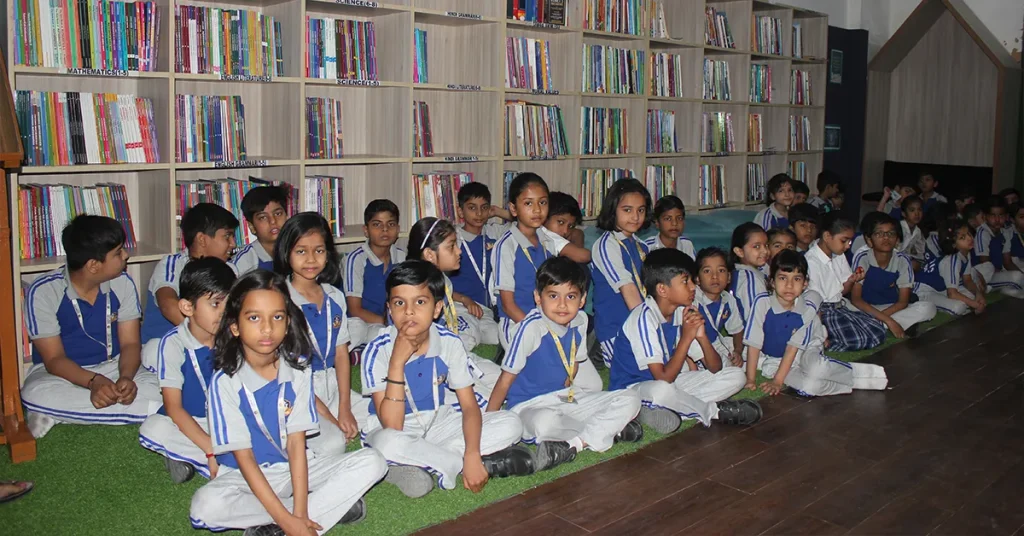
Choosing the Best Primary School in Greater Noida is about finding the right environment for your child’s learning, development, and well-being.
For younger children, this means having teachers who understand their needs, classrooms that encourage exploration, opportunities to play and participate, and staff members who provide care and guidance throughout the day.
At Sanfort World School, we work towards bringing these elements together through our academic approach, learning facilities, sports, extracurricular activities, and student support arrangements.
We also understand that every child is different. Some children are naturally outgoing, while others take time to open up. Some learn through observation, while others understand concepts better through activities and practical experiences.
Our aim is to encourage every child to participate, explore their interests, build confidence, and develop a positive attitude towards learning.
For parents comparing schools in Greater Noida, we encourage you to visit our campus, interact with our teachers, and understand our approach to early and primary education.
Give Your Child a Happy and Confident Start at Sanfort World School
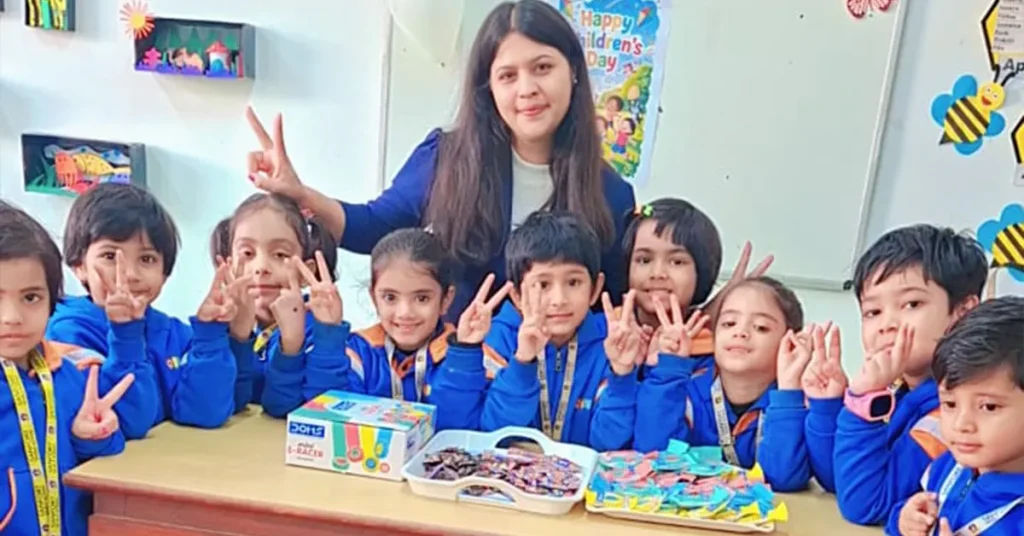
The early years of education are about much more than learning alphabets, numbers, and completing classroom activities. They are about developing curiosity, friendships, communication skills, confidence, and good habits that stay with children as they grow.
If you are exploring schools near Pari Chowk Greater Noida for nursery to primary classes, we invite you to visit Sanfort World School, Omega 1, Greater Noida.
Meet our teachers, explore our classrooms, understand our teaching approach, and learn how we support young learners throughout their school journey.
Book a School Visit Today! Because the right school is not just where children begin their education. It is where they begin to enjoy learning, discover their abilities, and grow with confidence.
Frequently Asked Questions About Choosing a School Near Pari Chowk for Nursery to Primary Classes
1. Which schools near Pari Chowk offer CBSE education from nursery to primary classes?
Several schools in Greater Noida offer CBSE education across different age groups. Parents should check the school’s curriculum, teaching approach, facilities, and academic continuity before making a decision. Sanfort World School, located in Omega 1, Greater Noida, offers education from the early years through senior secondary classes under the CBSE curriculum.
2. Do schools near Pari Chowk offer activity-based learning for nursery students?
Yes, many schools incorporate activity-based learning into their early education programmes. Activities such as storytelling, rhymes, puzzles, colouring, counting games, and hands-on exercises help young children develop language, creativity, observation, and basic mathematical skills.
3. How important are extracurricular activities in nursery and primary education?
Extracurricular activities help young learners develop skills beyond academics. Art, craft, music, dance, and sports encourage creativity, physical development, communication, and confidence. They also give children opportunities to explore their interests and interact with their classmates.
4. Why should parents consider Sanfort World School for nursery to primary admission?
Sanfort World School provides a supportive learning environment with modern classrooms, caring teachers, creative activities, sports facilities, and student care arrangements. Our focus is on helping young learners develop foundational academic skills, confidence, independence, and an interest in learning.
5. How can parents choose the right school for nursery and primary education near Pari Chowk?
Parents should consider the school’s teaching approach, teacher experience, classroom environment, safety arrangements, sports facilities, hygiene, and transport. Visiting different schools in Greater Noida and observing how teachers interact with young children can also help parents make an informed decision.
6. When do admissions open for nursery and primary classes for the 2027–28 academic session?
Admission schedules vary across schools. Parents interested in the 2027–28 academic session should check individual school websites or contact their admission teams for application dates, age eligibility, required documents, and seat availability. For admission-related information at Sanfort World School, parents can contact our admission team directly.